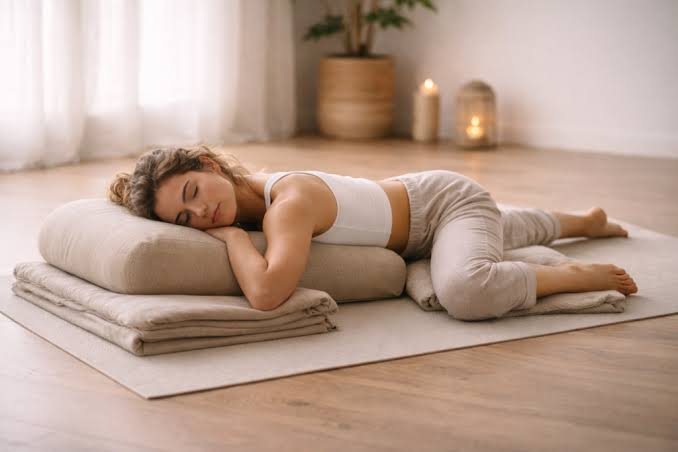
Restorative yoga offers a gentle way to slow down, release everyday tension, and create time for physical and mental relaxation. Busy schedules, long periods of sitting, and constant digital distractions can leave people feeling tired or overwhelmed. Unlike more active styles of yoga, restorative yoga emphasizes comfortable positions, supportive props, and relaxed breathing. Exploring yoga365.online can help beginners understand how slower movements and restful poses can become part of a balanced wellness routine.
Understanding Restorative Yoga and Its Benefits
Restorative yoga is a practice that uses supported postures to encourage relaxation without requiring significant physical effort. Cushions, folded blankets, bolsters, and yoga blocks help support the body, allowing practitioners to remain in comfortable positions for several minutes.
The purpose is not to achieve difficult poses or stretch as deeply as possible. Instead, the practice encourages stillness, body awareness, and a more relaxed approach to movement. Some people find that restorative yoga helps them unwind after a demanding day, while others appreciate the opportunity to pause and pay attention to their breathing.
Experiences vary, but incorporating gentle practices into a regular routine may support relaxation and provide a useful break from daily responsibilities.
Restorative Yoga Poses for Relaxation
Supported Child’s Pose is one option for people who can comfortably kneel. Placing a cushion beneath the torso can provide extra support and make the position feel more restful. The forehead can rest on a folded blanket while the arms remain relaxed.
Legs-Up-the-Wall Pose is another commonly used restorative position. Lie on your back near a wall and gently extend your legs upward if the position feels comfortable. A folded blanket beneath the head may provide additional support. People who experience discomfort in this position should choose an alternative.
Supported Reclining Bound Angle Pose allows practitioners to lie back with cushions supporting the torso and knees. This position can encourage a comfortable resting posture without forcing the hips or legs into a deep stretch.
The Role of Breathing in Recovery
Breathing is an important part of restorative yoga because it gives attention a simple place to settle. While resting in a supported position, notice the natural rhythm of inhaling and exhaling. Keep each breath comfortable rather than trying to control it too much.
When thoughts about work, study, or other responsibilities arise, acknowledge them without judgment and gently return your attention to breathing. This approach can help make the practice feel less rushed and encourage awareness of how the body responds to rest.
You can explore mindful breathing for deeper relaxation to find simple techniques that complement a restorative yoga session.
Creating a Restorative Yoga Routine
A restorative yoga routine does not need to be long or complicated. Choose a quiet space, prepare supportive props, and select a few comfortable positions that suit your needs. Beginning with a short session may make the practice easier to maintain.
Reduce distractions where possible and give yourself enough time to move slowly between positions. If a pose creates pain, numbness, dizziness, or unusual discomfort, leave the position and choose a more suitable alternative. People with injuries or specific health concerns should seek guidance from a qualified healthcare professional or experienced yoga instructor before trying unfamiliar poses.
Komentar Terbaru